Data
From raw data to trusted data.
Modelling, governance, quality and interoperability of data, and data science.
A master’s programme in computer science, devoted to AI systems that can reason and act in a coordinated way. Taught in English in Saint-Étienne, France.
In industry, buildings, cities, and energy networks, smart systems are now expected to do much more than simply learn from data. They reason based on explicit knowledge. They perceive the physical world and act within it. They work collaboratively with other systems and alongside people. And they must be accountable for the decisions they make. That is what DAKAI teaches.
Four strands carry this: data, agents and knowledge, and artificial intelligence where they meet. They build on the technical foundation industry expects (software engineering, data engineering, cloud and edge infrastructures, cybersecurity), with dedicated hours on responsible artificial intelligence. The programme is run by Mines Saint-Étienne – Institut Mines-Télécom and Université Jean Monnet Saint-Étienne.
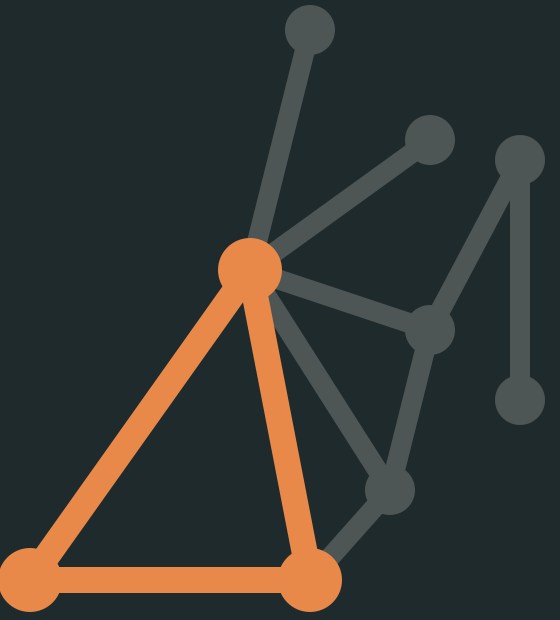
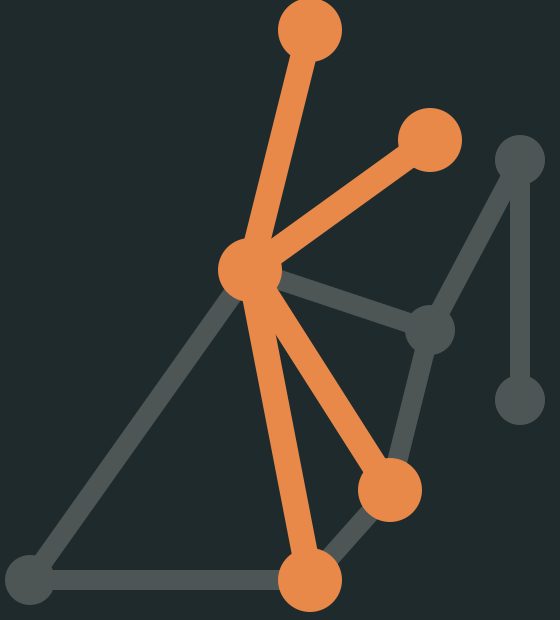
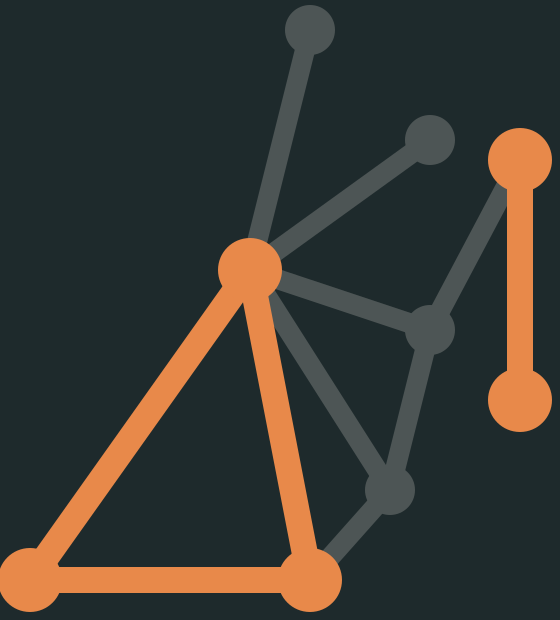
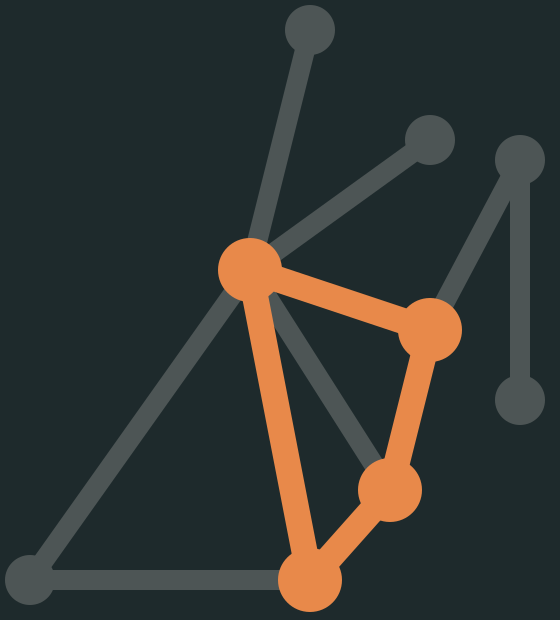
The name says what the programme teaches. The four strands run through both years and give their names to its two main series of modules: Data, Agents, Knowledge and Artificial Intelligence. Our logo is a single graph. Each strand lights up a part of it.
From raw data to trusted data.
Modelling, governance, quality and interoperability of data, and data science.
Autonomous systems that organise themselves.
Autonomy and interaction, coordination and organisation, collaboration, multi-agent simulation, and the agentic AI that builds on them.
Represent, reason, plan, explain.
Semantic web and knowledge graphs, logic and ontologies, planning and autonomous decision-making, explainability.
Hybridise learning and knowledge, responsibly.
Data-driven and knowledge-driven approaches, and hybrid AI which combines them. Ethical, social, environmental implications.
What sets DAKAI apart is the place it gives to research. Every student picks a topic in the very first semester and develops it in depth until the end of the master’s.
The project goes from the state of the art to a research contribution, with individual supervision by a faculty researcher. It spans three course units worth 22 credits, or 32 for students who choose research project II’ instead of the first-year internship. Internships, up to nine months in total, extend the work in industry or in a laboratory.
Teaching is grounded in real application domains. They run through the examples, lab sessions and project topics of every course unit.
Students have access to the technology platforms of Mines Saint-Étienne: IT’M Factory, Territoire and Maq’IT.
Graduates work on intelligent systems, from their design to their operation. Their first positions include:
The eighteen-month research project also prepares students to go on to a PhD.
The first year is open to holders of a bachelor’s degree (180 ECTS) in computer science or equivalent. Students who have completed a first year of master’s in computer science can apply directly to the second year. We welcome applications from all over the world.